Golden Achieves SOC 2 Compliance
Golden achieves SOC 2 compliance, reinforcing our commitment to data security, trust, and nonprofit impact.
‹ Previous Post
Keeping your volunteer program thriving isn’t just about recruiting passionate people — it’s about knowing what’s working (and what’s flopping).
Volunteer managers juggle so much: engagement, retention, reporting, impact… it’s chaos without the right numbers. Tracking the right key performance indicators (KPIs) turns all that chaos into clarity. With the right data, you can prove your program’s value, improve your processes, and make volunteers feel more connected to your mission.
Ready to stop guessing and start growing? Let’s dive in!
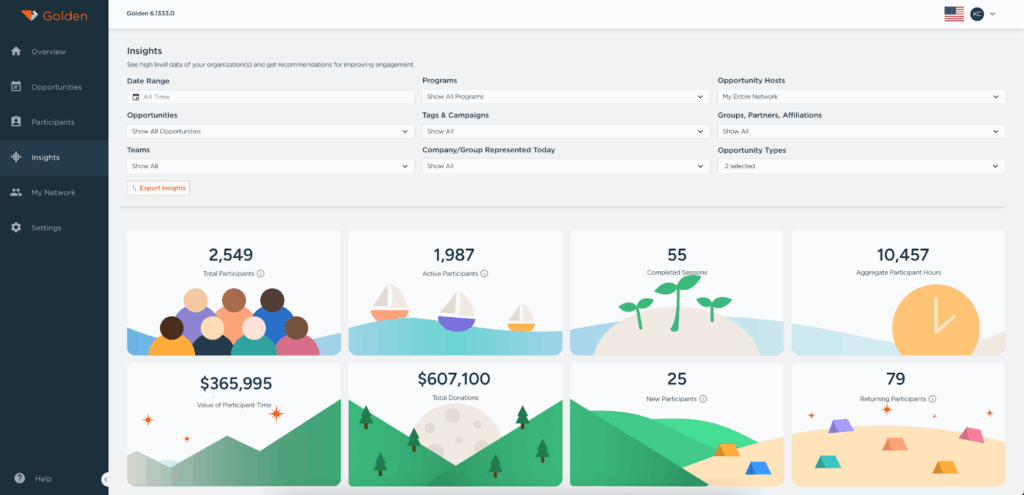
Tracking KPIs gives your volunteer program a heartbeat — a way to understand its rhythm, strengths, and weak spots. Numbers might sound cold, but in reality, they reveal the story behind every hour donated and every goal achieved. You can see where energy flows freely and where enthusiasm quietly fades. Maybe volunteers are showing up strong but slipping away after a few events. Maybe your training works wonders, but recognition lags behind. KPIs expose those patterns so you can respond with intention, not guesswork.
They also give your program credibility when you’re reporting to donors, boards, or community partners. It’s one thing to say your volunteers are making a difference; it’s another to show exactly how. With the right data, you can highlight progress, prove impact, and celebrate wins backed by evidence. Tracking KPIs isn’t about chasing numbers, it’s about shaping a more effective, sustainable, and deeply human volunteer experience.
problems as they pop up.
When you track volunteer data, you start seeing your program from multiple angles — not just who shows up, but how often, how engaged they are, and how their contributions tie back to your organization’s mission. Over time, those patterns tell a story that can’t be faked: what’s thriving, what’s lagging, and what needs a total rethink.
Here’s where data makes a real difference in volunteer management:
When you start to embrace data as a daily tool instead of an annual chore, managing volunteers becomes less of a guessing game and more of a guided strategy. It helps you celebrate what’s working and fix what’s not without burning out your team. In the end, data doesn’t replace empathy — it strengthens it.
You’re not just counting heads; you’re understanding the humans behind the numbers, and that’s how you build a volunteer program that grows with purpose and heart.
One of the biggest traps volunteer managers fall into is confusing activity with impact. Just because your volunteers are busy doesn’t mean your program is effective. Counting hours or events alone can paint a misleading picture — it shows what people are doing, not what difference they’re making. Measuring the wrong things gives the illusion of success while the real issues quietly grow underneath.
Another mistake is chasing data for data’s sake. Many organizations collect a mountain of numbers with no clear plan for how to use them. You don’t need twenty dashboards — you need a handful of metrics that actually guide decisions. If the data isn’t helping you improve recruitment, retention, or community outcomes, it’s just noise.
Then there’s the storytelling problem. Impact isn’t just quantitative; it’s emotional. Reducing everything to numbers strips away the human side of volunteering — the sense of connection, growth, and shared purpose. A strong reporting approach blends both: hard data that proves outcomes and stories that show why those outcomes matter.
Finally, there’s inconsistency. Data collection often starts with enthusiasm but fades once things get busy. Without consistent tracking, trends vanish, and you lose the ability to see real progress over time. Sustainable measurement requires discipline and buy-in from your whole team, not just one person with a spreadsheet.
Impact measurement isn’t about perfection; it’s about honesty.
The goal isn’t to find flawless numbers but to create a clear, evolving picture of how your volunteers move the mission forward. When you measure with purpose and not panic, you turn data into a living tool for growth instead of a box to check at reporting time.
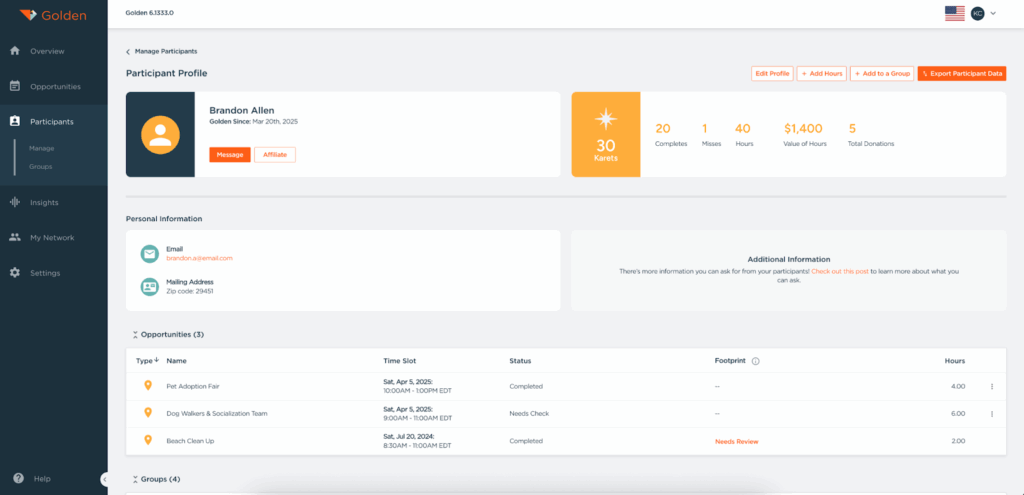
Every volunteer program has a lot of moving parts: people, projects, events, and goals. But without the right measurements, it’s tough to tell if all that effort is actually driving impact. That’s where KPIs come in. These key performance indicators act like your program’s dashboard, helping you see what’s running smoothly and what might need extra attention.
The value of KPIs is simple — they cut through assumptions. They replace “I think” with “I know.” With clear data, you can celebrate what’s working and fix what’s not, without relying on guesswork or gut feelings. Strong KPIs turn volunteer management from reactive to strategic, giving you confidence in every decision you make. They also make it easier to share success stories with funders, boards, and volunteers. Instead of vague claims about doing good, you can show measurable, credible progress.
Every organization is unique, but some numbers matter everywhere. Whether you manage a small local program or oversee hundreds of volunteers across multiple sites, four KPIs consistently reveal how well your team is performing: volunteer hours contributed, retention rate, satisfaction score, and overall program impact. These indicators give you a grounded view of your program’s health and help you build a stronger, more sustainable foundation for growth.

Volunteer hours are one of the most straightforward metrics you can track, but also one of the most revealing. They show the total time your volunteers dedicate to your mission and reflect how invested they are in your cause. Each logged hour represents real energy and effort that pushes your organization closer to its goals.
Tracking this KPI helps you spot patterns in engagement. You can see who your most reliable volunteers are, when participation peaks or dips, and which programs attract the most attention. This insight helps you plan staffing, events, and outreach more effectively.
It’s also a number that funders and partners pay attention to. When you can clearly show how volunteer time translates into outcomes, your case for support gets stronger. Accurate time tracking builds credibility—it turns goodwill into measurable impact.
To get the most out of this metric, go beyond counting hours. Use the data to understand where enthusiasm thrives and where it might be fading, so you can adjust and keep your program strong.
Tracking volunteer time works best when it’s simple and consistent. Choose one clear system for recording hours, whether that’s volunteer management software, digital check-ins, or a shared spreadsheet. A single, reliable process keeps data clean and easy to use. Encourage volunteers to log their hours immediately after each shift so details don’t get lost or forgotten.
Make time tracking part of your organization’s culture rather than a chore. When volunteers understand that accurate reporting helps show their impact, they’re more likely to take it seriously. Reliable data begins with reliable habits. Review your records regularly to correct errors, fill in gaps, and make sure your reports reflect reality. Consistency builds credibility, and credibility builds trust.
Volunteer hours are one of the clearest ways to prove your program’s value. When you can quantify the time your volunteers give, you show funders and partners that your organization drives real, measurable impact. Many grants and sponsors ask for these numbers because they translate directly into financial value and community reach.
Tracking hours also helps you calculate the estimated dollar value of volunteer time, which strengthens your reports and proposals. Beyond funding, this metric highlights growth over time—showing how your program’s reach, engagement, and efficiency continue to expand. When your numbers tell that story clearly, support and opportunities follow naturally.
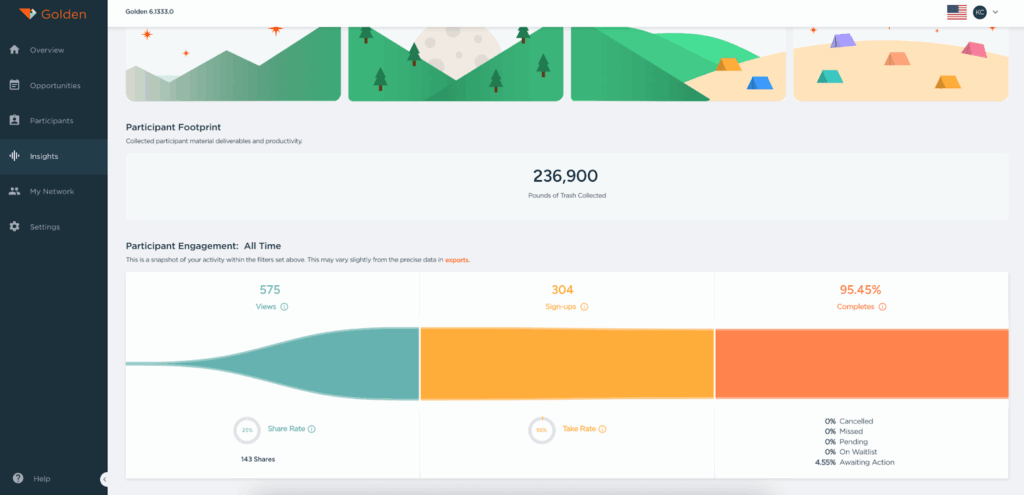
Retention is one of the most telling indicators of a program’s health. If volunteers keep coming back, it means they feel valued, supported, and connected to your mission. If they don’t, something in the experience isn’t clicking. Retention shows not just who joins your cause, but who stays to help it grow.
Tracking volunteer retention helps you understand your program’s stability over time.
High turnover can reveal issues with training, recognition, or communication. Meanwhile, consistent retention often points to strong leadership and meaningful engagement. Comparing retention rates across programs or time periods can highlight where your volunteer experience is thriving and where it needs attention.
Retention also affects recruitment. A program that keeps its people builds momentum and community trust, while one constantly replacing volunteers drains time and resources. You can measure retention annually or by project cycles—what matters most is that you track it regularly and respond when the numbers dip.
A strong retention rate doesn’t happen by accident; it’s built through respect, appreciation, and purpose. Celebrate milestones, offer growth opportunities, and make sure every volunteer sees how their contribution fits into the bigger picture. People stay where they feel seen and where their time truly matters.
Volunteer satisfaction captures how your people feel about the experience you’re creating. It’s an emotional metric, but it’s every bit as important as hours or retention. A happy volunteer is a loyal volunteer—and loyalty fuels long-term impact.
You can measure satisfaction through surveys, interviews, or quick pulse checks after events. Ask about communication, training, leadership, and whether volunteers feel their work has meaning. Anonymous feedback often gives the most honest answers. Once you gather results, look for trends: what makes people light up, and what consistently frustrates them?
Tracking satisfaction over time helps you spot small problems before they grow. Low scores might signal burnout, confusion about roles, or lack of recognition. High scores, on the other hand, tell you where your program shines and can guide your messaging when recruiting new volunteers.
Satisfaction isn’t about keeping everyone happy all the time—it’s about listening and responding. When you show volunteers their feedback leads to real improvements, they feel heard and invested. That trust strengthens your community, builds consistency, and helps your mission thrive long after the first sign-up.
Want to improve your volunteer satisfaction scores? Consider showing some extra volunteer appreciation – this small gesture goes a long way! Don’t know where to start? Consider reading our blog post “How to Build a Volunteer Recognition Program That People Love”.

Impact is the “why” behind everything you measure. It answers the question: What difference are we making? Counting hours and tracking satisfaction mean little without connecting those metrics to real-world change. Impact turns data into purpose.
Program impact can be measured in many ways, depending on your mission. Maybe it’s meals served, trees planted, people mentored, or funds raised. The key is to define what success looks like for your organization and measure outcomes that reflect that definition. Quantitative data—like numbers served or projects completed—should be paired with qualitative stories that bring those results to life.
When you link volunteer activity to tangible outcomes, you strengthen every part of your program. Funders see the return on their investment. Volunteers feel proud of their contributions. Leadership gains insight into what’s truly effective.
Be consistent with your measurements and review them regularly to track progress over time. Don’t just report impact—use it to refine your strategy. Clear, evidence-based outcomes prove that your program isn’t just busy; it’s making a real difference where it counts.
At Golden, we know volunteer managers have enough on their plates. Tracking KPIs shouldn’t be another mountain to climb. That’s why we built our platform to handle the data work for you — so you can focus on people, not spreadsheets.
With our recruitment tools, you can attract the right volunteers and start gathering engagement data automatically from the moment they sign up. Our scheduling system keeps every shift organized and tracked in real time, while our communication tools make it effortless to share updates, reminders, and recognition messages that keep everyone connected.
When it’s time to measure your program’s impact, our reporting dashboard gives you powerful insights in seconds. You’ll see trends in participation, satisfaction, and retention — all visualized clearly and ready to share with your team, funders, or board.
We designed Golden Volunteer to turn data into direction and tracking into progress. Whether you’re managing ten volunteers or ten thousand, we make it simple to see what’s working and where to grow next.
Schedule a free demo today and explore Golden’s endless offerings.

Golden achieves SOC 2 compliance, reinforcing our commitment to data security, trust, and nonprofit impact.
‹ Previous Post
Turning volunteers into donors is one of the most effective ways nonprofits can deepen engagement and increase long-term support. By understanding each step of the volunteer-to-donor journey and tracking key touchpoints, organizations can build stronger relationships and maximize ROI. With the right data and thoughtful communication, volunteers can naturally evolve into passionate, loyal contributors.
Next Post ›1:1 consultation aimed at transforming your volunteer program
Learn how to transform supporters into donors
Help us spread our message