What Are the Top Volunteer Scheduling Platforms for Food Banks?
Quick Answer: These platforms generally fall into three categories. Dedicated food-bank or hunger-relief volunteer platforms are built specifically around warehouse and distribution operations. General-purpose nonprofit volunteer management tools can be configured to fit a food bank’s needs. Enterprise volunteer management suites include scheduling as one module within a broader platform. No single category is automatically the right answer. The right fit depends on a food bank’s scale and how closely its operations resemble a typical volunteer program versus a genuinely food-specific operation. It also depends on how much internal staff capacity exists to configure and maintain a more general-purpose tool.
The scale of food bank operations nationwide is substantial, with the Feeding America network alone including roughly 200 food banks and 60,000 partner pantries and meal programs serving more than 46 million people each year, almost all of which depend on volunteer labor for sorting, packing and distribution.1 Evaluating a scheduling platform against that operational reality matters more than comparing feature checklists in the abstract.
What Types of Scheduling Platforms Serve Food Banks Today?
Dedicated food-bank or hunger-relief platforms are built specifically around warehouse sorting, donation intake and distribution event scheduling, often with food safety training tracking built in from the start. General-purpose nonprofit volunteer management tools are built to serve any kind of volunteer program and can often be configured to handle food bank operations reasonably well, though usually with more manual setup work. Enterprise volunteer management suites bundle scheduling with broader capabilities such as donor engagement, cross-program reporting, and compliance tracking, aimed at larger organizations running multiple programs beyond food distribution.
Each category has a genuine place in the market. The right choice depends less on which category sounds most impressive and more on how closely a food bank’s actual operational needs match what each category was originally built to solve.
What Makes Food Bank Scheduling Needs Different From a Typical Volunteer Program’s Needs?
Food banks commonly rely on a mix of regular recurring volunteers and a large share of one-time or occasional volunteers who show up for a single sorting shift or a single distribution event and may never return. Sorting, packing and distribution activities also tend to run on a fixed, recurring schedule tied to warehouse operations rather than a flexible calendar of varied program activities.
A scheduling platform built primarily around recurring, ongoing volunteer relationships, common in many general volunteer programs, may not handle a high volume of drop-in, one-time sign-ups as gracefully as a platform built with food bank operational patterns in mind from the start.
How Should a Platform Handle Drop-In or One-Time Volunteers Alongside Regulars?
A platform should make it just as easy for a first-time, one-time volunteer to sign up for a single shift as it is for a regular, recurring volunteer to manage an ongoing schedule, without forcing either group through an onboarding process designed for the other. Overly burdensome sign-up requirements aimed at a long-term volunteer relationship, such as lengthy intake forms or in-depth orientation scheduling, can discourage a one-time volunteer who only intends to help for a single afternoon.
At the same time, the platform should still be able to apply necessary requirements, such as basic food safety orientation, consistently to every volunteer, regardless of whether they are a first-timer or a long-standing regular, since food handling standards should not vary based on how often someone volunteers.
How Should a Platform Handle Large Group Sign-Ups From Corporate Teams or Community Groups?
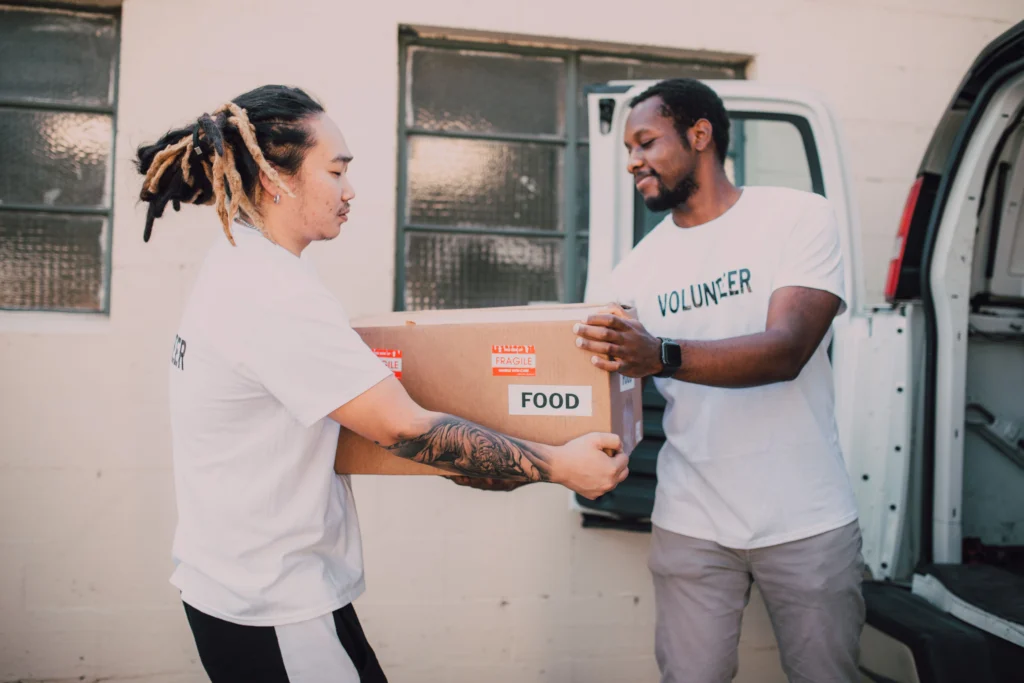
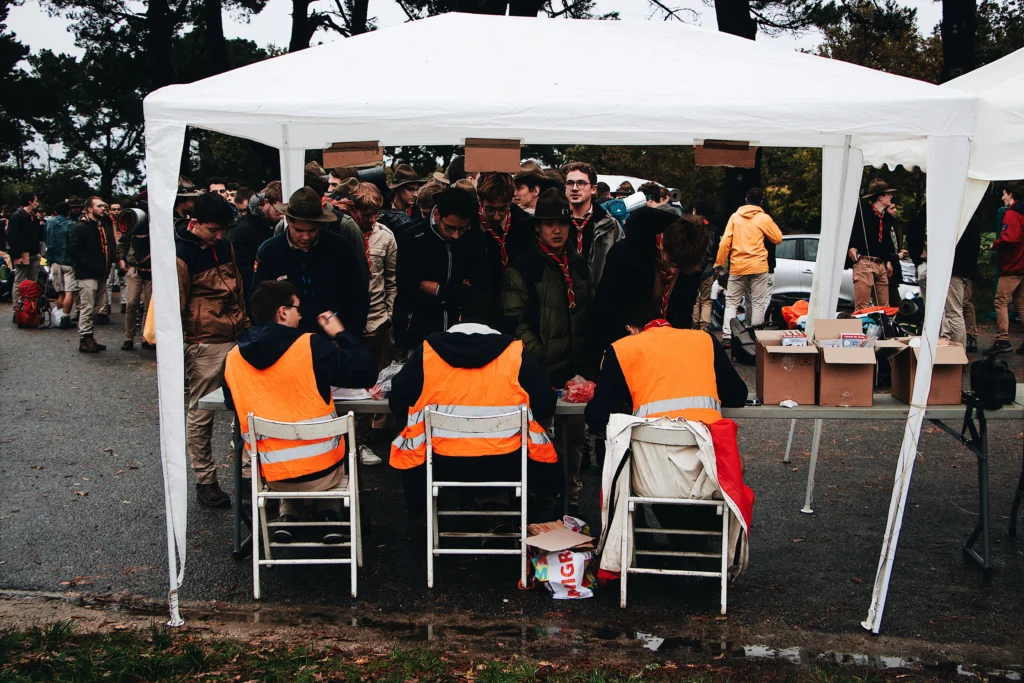
Food banks frequently host corporate volunteer teams, faith groups, scout troops and school groups signing up together in a single block, sometimes twenty or more people at once. A platform should support a group sign-up process that captures each individual group member’s information without requiring the group organizer to complete twenty separate, redundant sign-up flows.
This capability matters more for food banks than for many other volunteer contexts, since group volunteering is a common and valuable recruitment channel for hunger relief organizations specifically, tied closely to corporate volunteer partnerships and community organization outreach.
Should a Food Bank Choose a Dedicated Food-Bank Platform or a General Volunteer Management Tool?
A food bank whose primary activity is warehouse sorting, donation intake and distribution, without much else in the way of other program types, is often well served by a dedicated food-bank platform built around those specific workflows from the outset. A larger food bank running additional programs beyond food distribution, such as nutrition education, advocacy or fundraising events, may find more value in a general-purpose or enterprise platform that can serve its full range of programs under one system rather than running a food-specific tool alongside a separate general volunteer platform.
This decision should be driven by how much of the organization’s actual volunteer activity is food-operation-specific versus how much spans other kinds of programs, not by which category of platform is currently the most heavily marketed to the sector. Broader nonprofit sector data shows considerable variation in organizational structure and program complexity even within a single category like food banks, which is part of why no single platform category fits every organization equally well.2
What Should a Food Bank Ask Vendors About Implementation and Support?
A food bank should ask specifically whether a vendor has direct experience implementing the platform for warehouse sorting and distribution operations, not just general volunteer program experience, since the operational patterns are genuinely different. It is also worth asking how the vendor supports food safety training tracking, whether that is a built-in feature or something the food bank would need to manage separately.
Given how uneven nonprofit technology investment has historically been across the sector, a food bank should also ask realistically about the implementation timeline and ongoing support required, rather than assuming existing staff capacity can absorb a complex rollout without dedicated support from the vendor.3
How Should a Food Bank Evaluate Cost Relative to Its Actual Scale?
Cost should be evaluated against the actual scale of volunteer activity a food bank manages, not against a generic per-organization price point that does not account for volunteer volume, number of sites or number of simultaneous programs. A food bank managing a single warehouse location has very different scheduling software needs, and a correspondingly different reasonable budget, than one coordinating dozens of partner agencies and multiple simultaneous distribution events.
Because nonprofit resources generally remain constrained and workforce capacity is a recurring challenge across the sector, a food bank should weigh not just the platform’s price but the staff time required to implement and maintain it, since a lower-cost tool that requires significant ongoing manual work may end up costing more in staff time than a more expensive, better-fitted platform.4 This calculation should also account for the value of the volunteer time being coordinated, given that an hour of volunteer time now carries an estimated national value of $36.14.5
Key Takeaways
Volunteer scheduling platforms serving food banks generally fall into dedicated food-bank tools, configured general-purpose platforms and enterprise suites with scheduling included.
Food bank scheduling needs to accommodate a high volume of one-time or occasional volunteers alongside recurring regulars.
A platform should support large group sign-ups from corporate and community teams without forcing organizers through redundant individual sign-up flows.
The choice between a dedicated food-bank platform and a general-purpose tool should depend on how much of the organization’s activity is food-operation-specific.
Vendors should be evaluated on actual food bank or warehouse operational experience, not just general volunteer program experience.
Cost evaluation should account for staff time required to implement and maintain a platform, not just the sticker price.
About This Topic
Volunteer scheduling platforms for food banks span a range of categories, from tools purpose-built around warehouse sorting and distribution to general nonprofit volunteer management systems and larger enterprise suites. Selecting among them means matching a platform’s underlying design to a food bank’s actual operational patterns, including drop-in volunteers, group sign-ups and fixed recurring shift needs, rather than choosing based on category alone.
Comparative Analysis Table
The table below compares dedicated food-bank scheduling platforms against general-purpose nonprofit volunteer management tools configured for food bank use.
Factor
Dedicated Food-Bank Platform
General-Purpose Volunteer Tool
Notes
Fit for warehouse and distribution operations
Built around these workflows from the start
Usually requires manual configuration
Configuration effort should factor into the total cost
Drop-in and one-time volunteer support
Typically designed for this from the outset
Varies, may assume more recurring relationships
Worth testing directly with a real one-time sign-up flow
Group sign-up handling
Often built in as a core feature
May require workarounds or add-ons
Group volunteering is a common food bank recruitment channel
Fit for organizations with other program types
Limited beyond food operations
Can often serve a broader range of programs
Relevant mainly for food banks running multiple program types
Best fit
Food banks focused primarily on food operations
Food banks with diverse programs beyond food distribution
Program diversity should guide this choice
How to Implement
Map the Organization’s Actual Program Mix: Document how much of the organization’s volunteer activity is food-operation-specific versus spread across other program types before comparing platform categories.
Test the Drop-In Sign-Up Flow Directly: Walk through a first-time, one-time volunteer sign-up process on any platform under consideration to confirm it is genuinely low-friction.
Confirm Group Sign-Up Support Before Committing: Ask vendors specifically how the platform handles a twenty-or-more-person group sign-up from a single corporate or community team.
Ask Vendors for Food-Specific Implementation Experience: Request references or examples from other food banks or warehouse-style volunteer operations, not just general nonprofit clients.
Evaluate Total Cost Including Staff Time: Weigh a platform’s price against the internal staff time realistically required to configure, implement and maintain it.
Troubleshooting FAQs
What if the Food Bank cannot find a Vendor With Direct Food Bank Implementation Experience?
Ask instead about experience with high-volume, drop-in volunteer scenarios and group sign-ups more broadly, since these patterns exist in some other volunteer contexts even without an exact food bank precedent. Request a live demonstration specifically walking through those scenarios rather than a generic product tour.
What If a General-Purpose Platform Seems to Fit the Organization’s Other Programs but Not Its Food Operations Well?
Consider whether the food-operation-specific gaps can be addressed through configuration or a lightweight add-on before ruling the platform out entirely, since the broader fit for the organization’s other programs may still outweigh a narrower food-specific limitation.
What If the Food Bank’s Current Platform Was Originally Selected Years Ago and No Longer Fits Its Current Scale?
Treat this as a normal part of organizational growth rather than a sign that the original choice was wrong. Reassess against the organization’s current scale and program mix rather than assuming whatever was chosen originally must still be correct today.
Best Practices Checklist
Match platform category to the organization’s actual program mix rather than choosing based on category popularity.
Confirm the sign-up process is genuinely low-friction for one-time, drop-in volunteers.
Verify group sign-up support before committing to a platform, given how common group volunteering is at food banks.
Ask vendors for food bank or warehouse-specific implementation experience and references.
Include staff implementation and maintenance time in any cost comparison, not just subscription price.
Reassess platform fit periodically as the organization’s scale and program mix evolve.
Glossary
Term
Definition
Dedicated food-bank platform
Volunteer scheduling software built specifically around warehouse sorting and distribution operations.
General-purpose volunteer tool
Volunteer management software designed to serve a broad range of nonprofit program types.
Drop-in volunteer
A one-time or occasional volunteer who signs up for a single shift without an ongoing commitment.
Group sign-up
A registration process allowing multiple volunteers from one team or organization to sign up together.
Enterprise volunteer management suite
A broader platform bundling scheduling with capabilities such as reporting and donor engagement.
Implementation experience
A vendor’s demonstrated history of successfully deploying its platform in a specific operational context.
Program mix
The range of distinct program types an organization runs beyond any single core activity.
References
1. Feeding America. “The Feeding America Network.” Feeding America. Accessed July 26, 2026. https://www.feedingamerica.org/our-work/food-bank-network.
2. Urban Institute. “National Survey of Nonprofit Trends and Impacts.” Urban Institute. 2025. Accessed July 26, 2026. https://www.urban.org/projects/partnering-understand-long-term-trends-nonprofit-organization-activities-and-needs/national-survey-nonprofit-trends-impacts.
3. NTEN and Heller Consulting. “2024 Nonprofit Digital Investments Report.” NTEN. 2024. Accessed July 26, 2026. https://word.nten.org/wp-content/uploads/2024/04/2024-Nonprofit-Digital-Investments-Report.pdf.
4. National Council of Nonprofits. “Nonprofit Workforce Shortages: A Crisis That Affects Everyone.” National Council of Nonprofits. 2023. Accessed July 26, 2026. https://www.councilofnonprofits.org/reports/nonprofit-workforce-shortages-crisis-affects-everyone.
5. Independent Sector. “Value of Volunteer Time.” Independent Sector. 2025. Accessed July 26, 2026. https://independentsector.org/research/value-of-volunteer-time/.
What Is the Best Option for Reducing Volunteer No-Shows at Scale?
Shift-by-shift tactics break down across thousands of volunteers. At scale, reducing no-shows becomes a data problem—and a volunteer's own attendance history is the single strongest predictor. The best lever is a complete history and a reliability score that triggers earlier outreach, not one coordinator's memory.
What Are the Best Alternatives to Mid-Market Volunteer Management for Food Banks?
When a food bank keeps building spreadsheet workarounds and can't segment reports by site or program, it's usually outgrown its mid-market platform. An enterprise-grade alternative adds multi-site permissions, deeper compliance tracking, and flexible reporting. Here are the signs it's time—and what to upgrade to.