H.R. 1 Medicaid Community Engagement
Close the H.R. 1 Community Service Loop
Golden gives state agencies proven, turnkey volunteering infrastructure: personalized volunteer opportunities for every beneficiary, hours verified at the point of service, and real-time interoperability with the systems you already run, so Medicaid, SNAP and TANF beneficiaries can advance their skills and retain their benefits without manual processing.

Serves 50,000+ organizations | SOC 2 certified and HIPAA compliant | Deployed across government, healthcare, nonprofit, education, food bank and other community programs
Work & School Verify Automatically.
Community Service Does Not.
H.R. 1 gives a beneficiary four pathways to comply, plus an income equivalent that verifies against payroll data exactly as paid work does. Three of the four can be checked against data your state already holds. One cannot, because no government record of it has ever existed.
| Pathway | What Your State Checks It Against |
|---|---|
| Paid work | Payroll and wage records, state and local agency data, and the federal information available through the electronic service the Secretary maintains |
| Education | Institutional records, and the National Student Clearinghouse named in the rule’s preamble |
| Work program | The administering agency’s own records, since the state or one of its partners is usually the administrator |
| Community service | Nothing. No national system records who volunteered where, for how long, or under whose supervision |
That last row is the core challenge. With nothing to query, the state has to ask the beneficiary for documentation and then evaluate whatever arrives. Every renewal that cannot clear on its own becomes a notice, a 30 calendar day response window and a caseworker touch, and that is where eligible people lose coverage on paperwork.
It is also the only pathway where the state has to make sure opportunities exist. For paid employment, employers create the opportunity as a matter of course. For community service, no agency has previously been responsible for ensuring that a qualifying opportunity exists within reach of every adult enrollee in every county, rural ones included.
Golden was built for that half of the requirement, and has been running it at national scale for a decade.

The Rule Does Not Just Ask for Volunteers.
It Specifies the System.
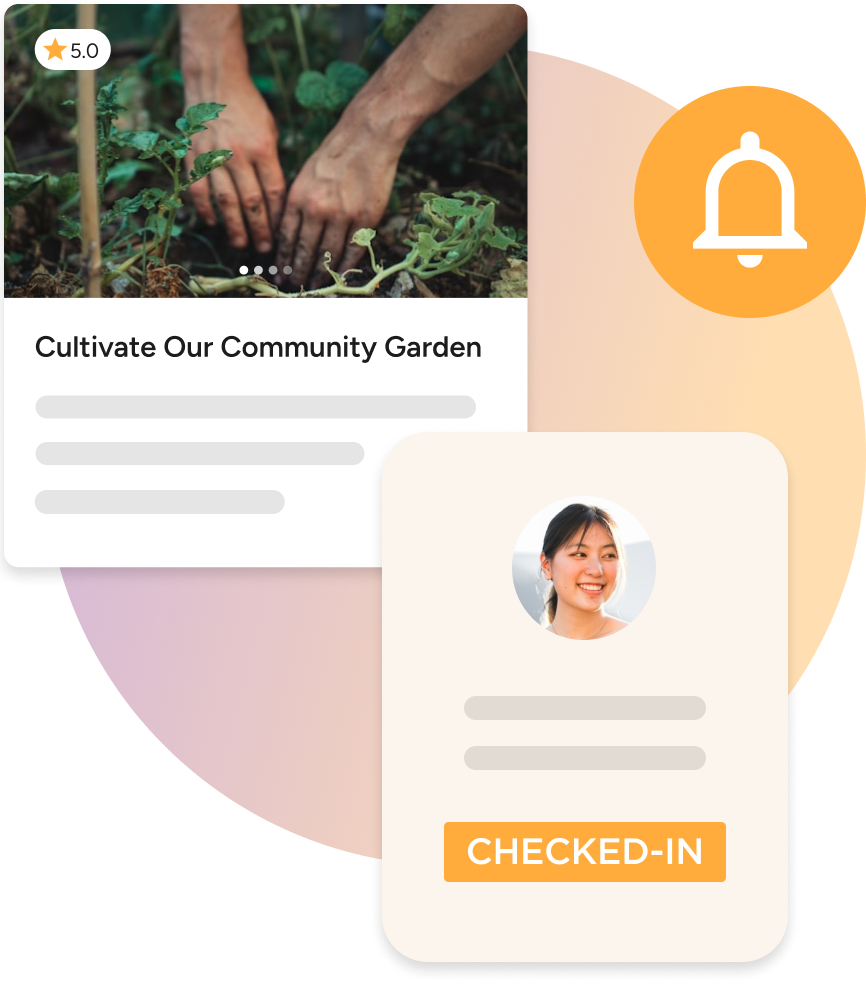
To count as community service, the activity has to happen under a public or nonprofit organization that provides oversight and, in the words of the rule, has “a process in place to track the community service completed by individuals, including the type of community service activity, dates and hours the community service is completed, and a point of contact who can confirm the hours completed.”
That is a systems requirement written into a Medicaid regulation. Every qualifying host organization in every county needs it. Most do not have it today, and no state has been funded to give it to them.
Give Every Beneficiary Somewhere to Go
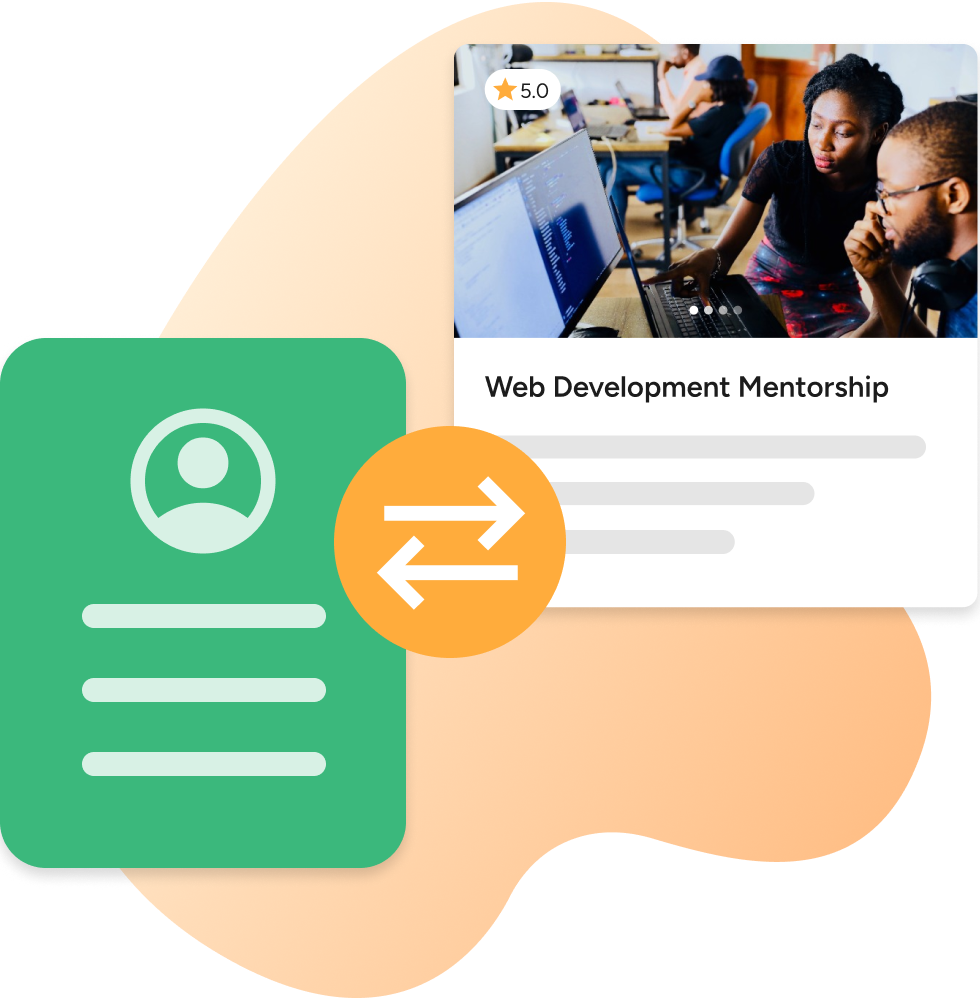
A community service requirement only works if there is community service available. Golden brings a live inventory of opportunities from public and nonprofit organizations, in-person and virtual, and personalizes what each beneficiary sees by location, by skills and interests, and by the credentials each opportunity requires.
Key Benefits
- Live opportunity inventory rather than web forms and callbacks.
- AI matching by skills, interests and availability, with location filtering and credential requirements applied per opportunity.
- Host organizations get the tracking capability the rule requires of them, including hour tracking and kiosk check-in, for free.
- Organizations adopt it directly and keep running their own programs on it.
- Virtual and remote options alongside in-person work, so beneficiaries without reliable transportation still have qualifying opportunities.
Capture Hours Without Manual Data Entry
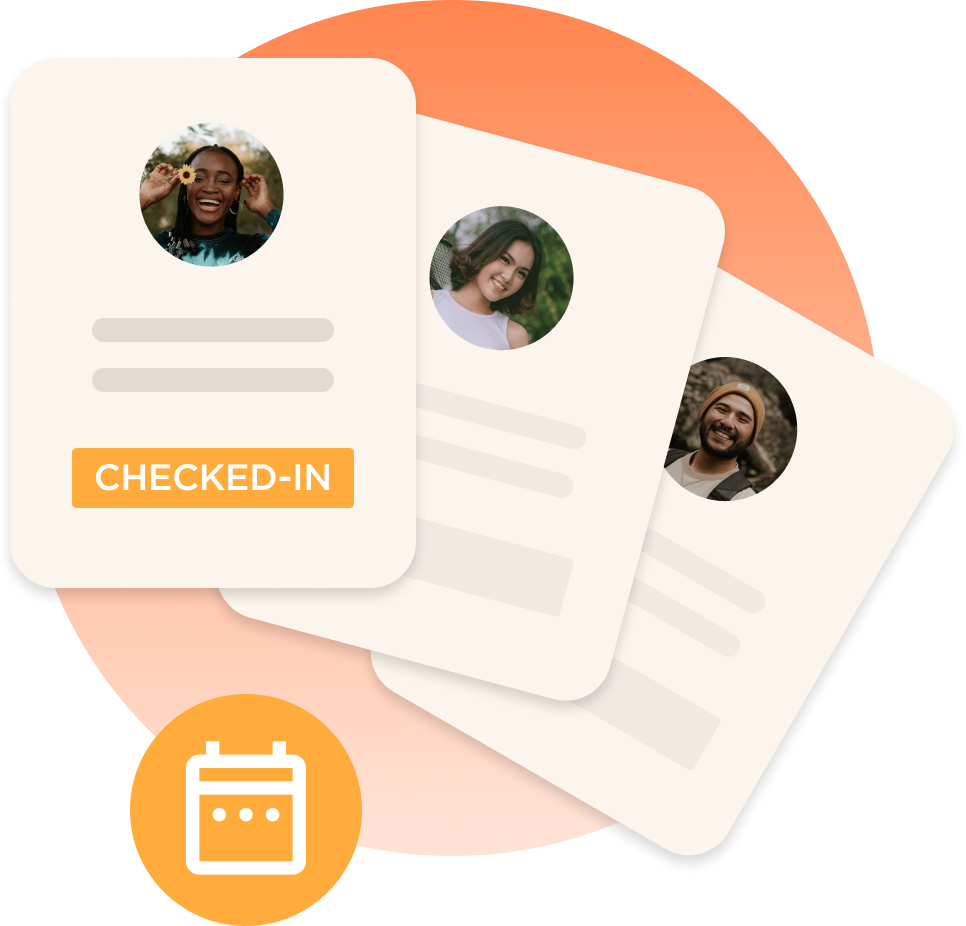
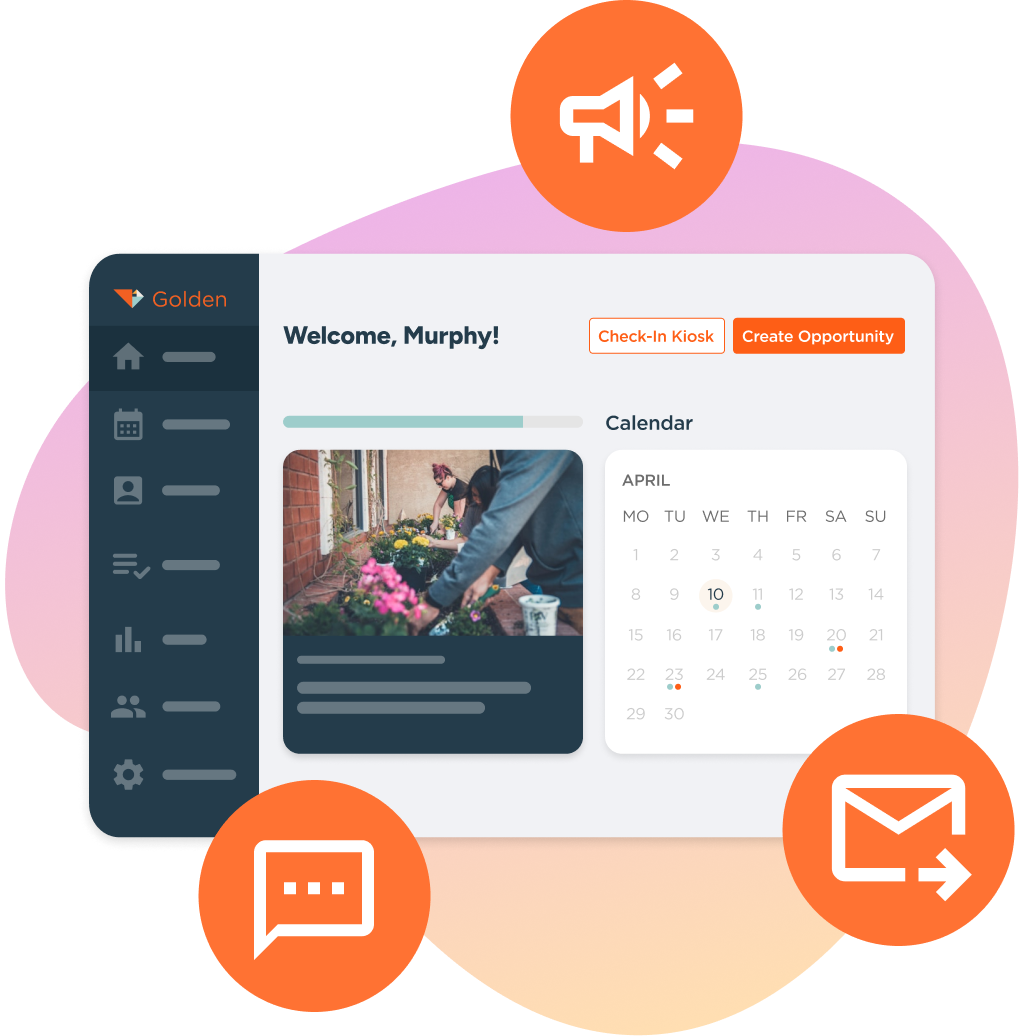
Compliance should not depend on a beneficiary remembering to file a timesheet or a caseworker reading a scanned form. Golden captures hours at the point of service through the volunteer app, the web, a QR code or a kiosk, including where connectivity is unreliable, and produces a record with identity, credentials and output already attached.
Key Benefits
- Check in and out with a single tap on mobile, web, QR code or kiosk, with hours logged automatically.
- Background checks, identity verification, trainings and waivers required before a volunteer is eligible for a role.
- GPS and time-stamped records that can be produced on appeal or audit.
- Capture continues offline and syncs when connectivity returns.
Return Verified Records to the Systems You Already Run
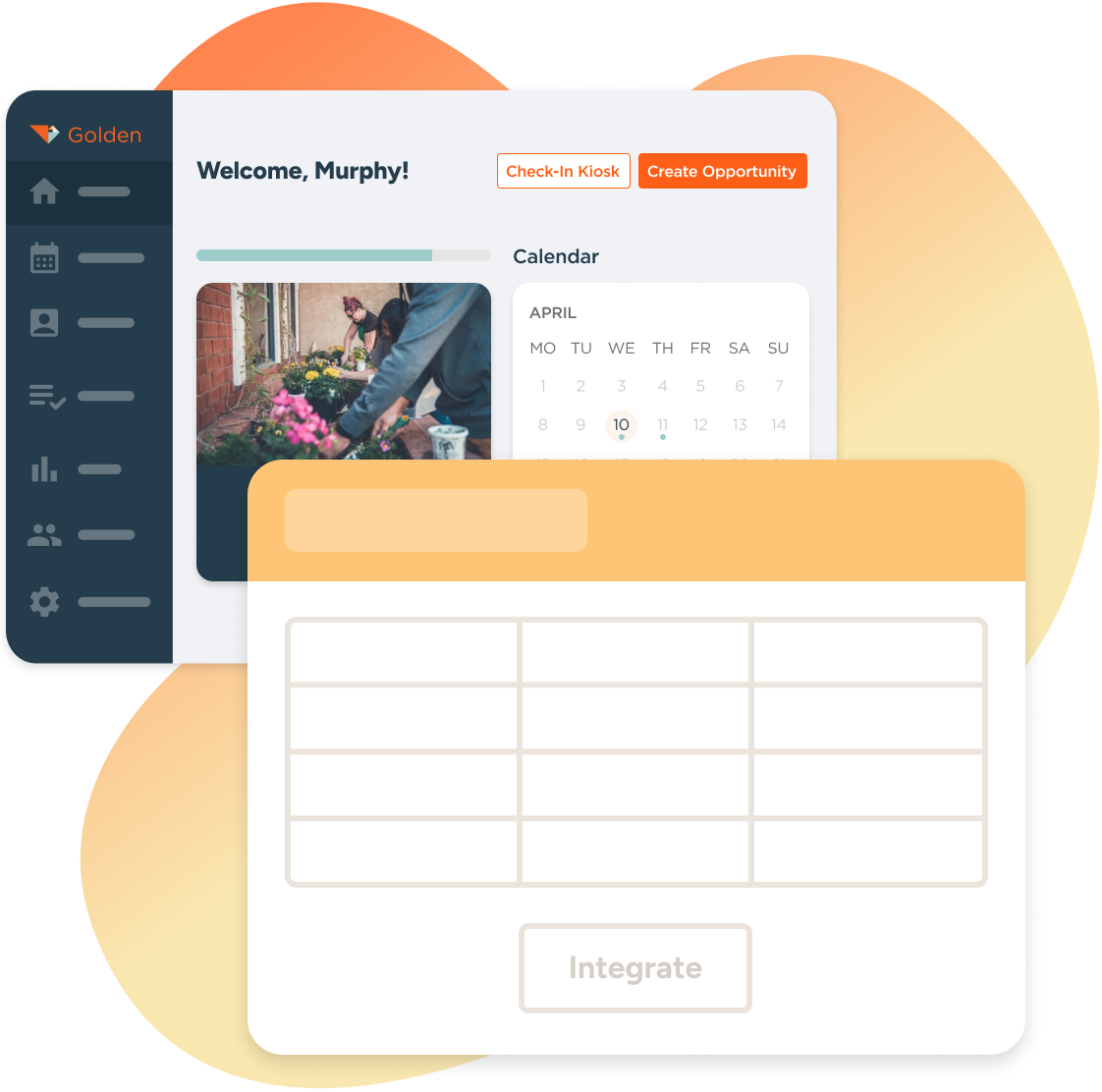
Golden is a layer, not a migration: the layer your eligibility system was never scoped to hold. It interoperates with your eligibility and enrollment environment in real time, so verified hours land where determinations already happen and nothing runs in a parallel database. A platform that cannot return hours without a new action from the beneficiary is a reporting tool, not a verification system.
Key Benefits
- Real-time synchronization through Golden’s API or MCP, with SSO.
- Branded volunteer web portals on your own subdomain, so the program stays your state’s.
- Bidirectional exchange with your eligibility and enrollment system of record through API or MCP, with native connectors where a state or its partners already run a commercial platform such as Salesforce, Microsoft Dynamics or Blackbaud.
- Supports ex parte verification at renewal rather than a new beneficiary action.
Help Beneficiaries Advance Their Skills and Retain Their Benefits
The requirement exists to move people toward self-sufficiency, not to move them off the rolls. Golden personalizes opportunities so hours accumulate into something a beneficiary can actually use, and so compliance becomes the byproduct of useful work rather than a paperwork exercise.
Key Benefits
- Opportunities matched to a beneficiary’s skills and interests, not just open slots.
- Background checks, waivers and documentation uploaded once and reused wherever they are needed.
- Sustained engagement over time rather than scattered one-off hours.
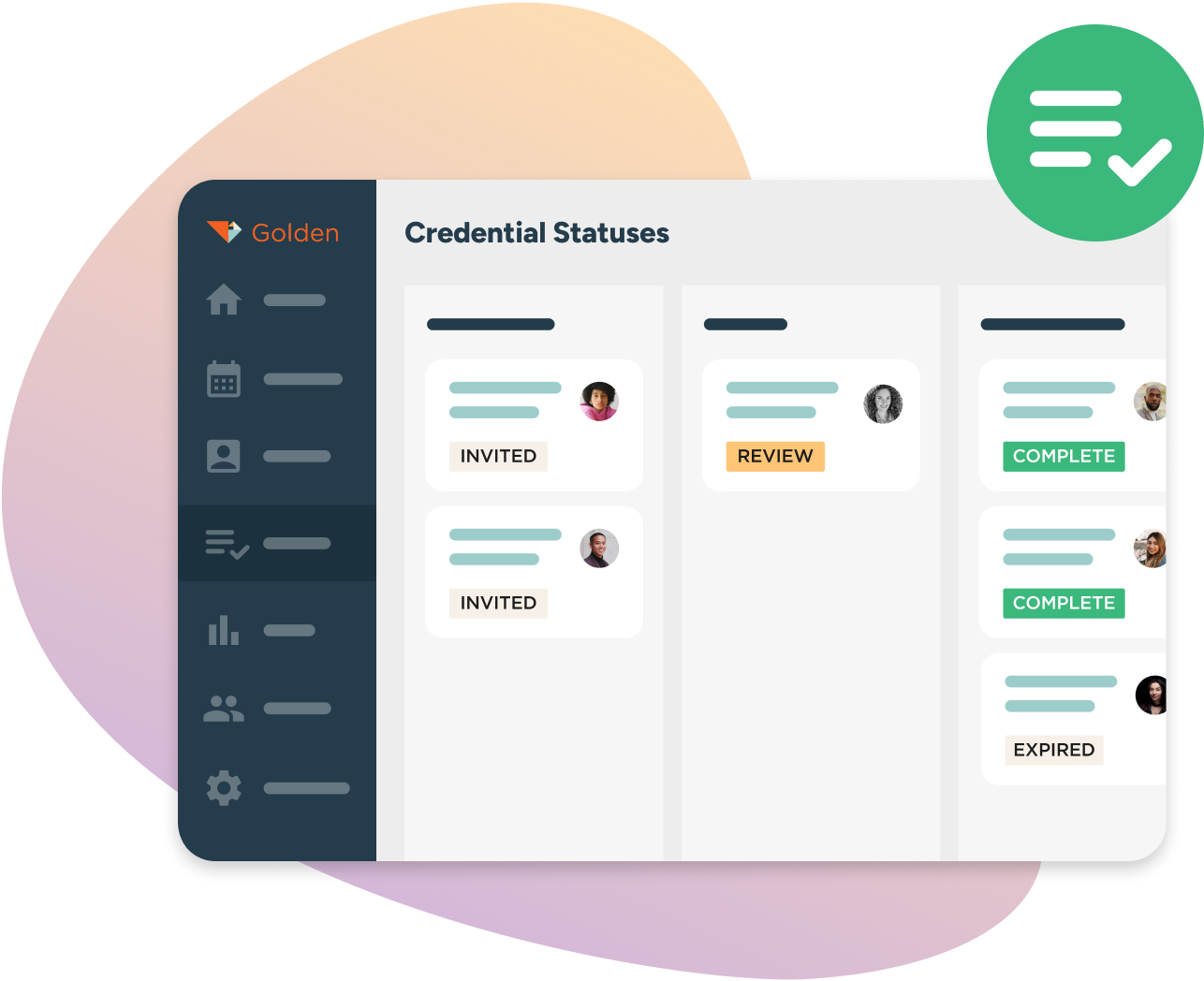
- Fewer procedural disenrollments, because qualifying hours are captured automatically.
Live in Weeks, Not Four Quarters
The deadline is January 1, 2027, and no state is going to run a new multi-year procurement to meet it. Golden is commercially available today and can be procured directly, through an implementation partner, or on an existing contract vehicle.
A Pilot Covers
- Configuration and branded portal setup.
- SSO and integration to your system of record.
- Partner onboarding and opportunity inventory.
- Live beneficiary users, with verified hours flowing back.
How It May Be Funded
The rule states that design, development or installation of new or enhanced eligibility and enrollment systems to implement the requirement may be eligible for 90 percent federal match under 42 CFR 433.112, with 75 percent for ongoing operations. CMS must approve the state’s advance planning document before the state incurs the expenditure.
Built for Public Programs
Golden already operates inside regulated environments, including government service programs and health systems, with the responsible oversight and security posture public programs require.
Key Benefits
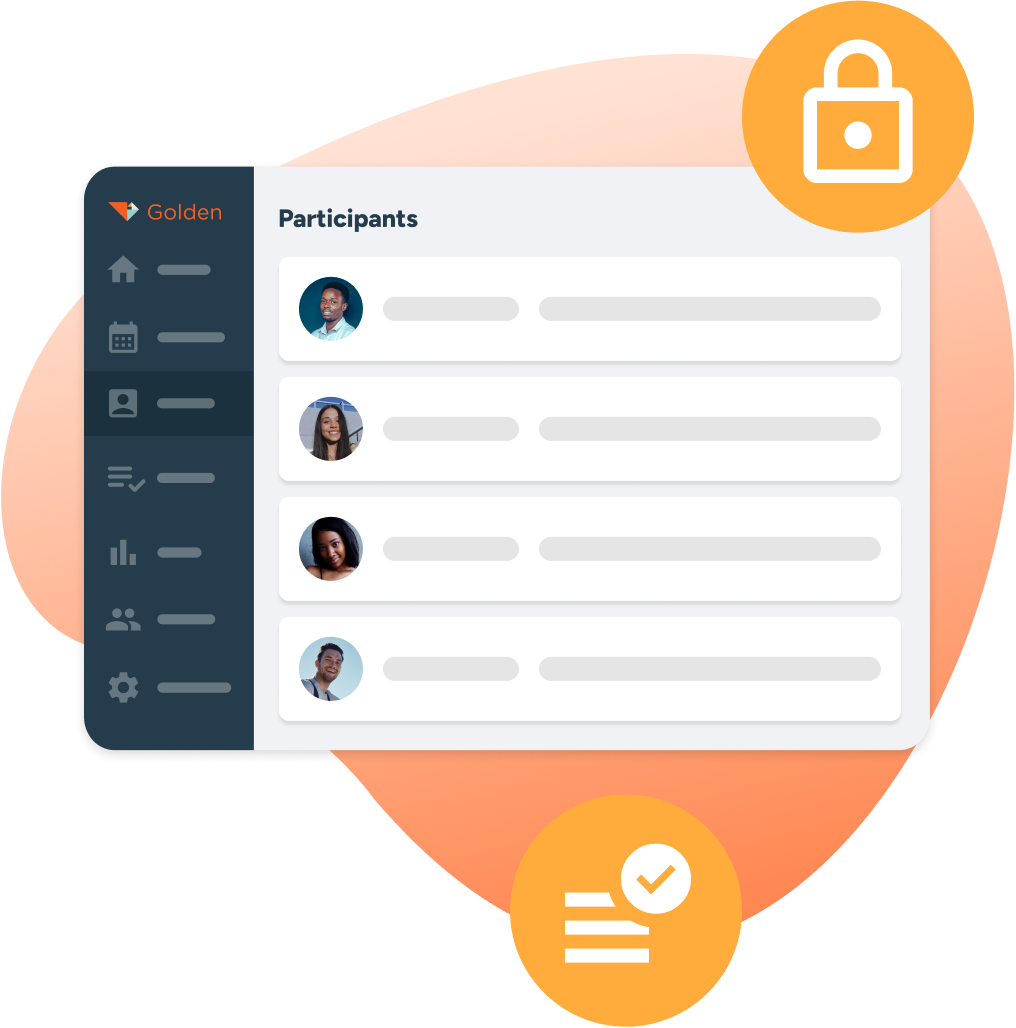
- SOC 2 certified and HIPAA compliant, supporting state privacy requirements.
- Published Responsible AI Policy, and an AI-native data architecture.
- Role-based access and sub-accounts so departments and agencies run their own programs under a central umbrella.
- Deployed in disaster response and other time-critical settings.
One System, Every Community Engagement Obligation
The same system runs for a state agency, a community-based organization or a federal agency. The same infrastructure supports SNAP and TANF community engagement, and the disaster response programs your agency already runs. Opportunity inventory, credentialing and verified hours work the same way regardless of which program a beneficiary is enrolled in. Adopting Golden for H.R. 1 also sets your network up for AI-native automation later, because the data is structured for it from day one rather than retrofitted.
Relied On by the Country’s Leading Organizations
The world’s most award-winning and trusted volunteering software: named #1 in Social Good on Fast Company’s 2026 list of the World’s Most Innovative Companies and to Fortune’s Change the World list, and recognized by The National Commission for Military, National, and Public Service, The United Nations, TIME and the Gates Foundation.




California Climate Action Corps, the state service program run out of California Volunteers in the Governor’s office, grew participation from 15,000 to 23,048 volunteers in its first year on Golden and engaged more than 75 partner organizations. AmeriCorps members running the program saved roughly six hours a week each that had gone to manual data entry.
“Golden has been very useful in our organization. This platform gives us a great opportunity to capture sign-ups and volunteer information in a user-friendly way.”
Kristin Ritzau
Executive Director, Food Exploration and Discovery,
and California Climate Action Corps site supervisor
Further Reading on the Community Engagement Requirement
Four pieces on what the requirement asks of states, what the rule asks of host organizations, and how to evaluate an approach.

H.R. 1’s 80-Hour Rule: Why Community Service Hours Are the Hardest to Verify
Three of the four pathways can be checked against data a state already holds. One cannot, and that asymmetry is where the operational risk sits.

H.R. 1 Community Service Compliance Without a New Procurement
How the community service pathway can be added to an existing eligibility environment as a layer rather than a replacement, and how the cost may be treated.

How Do States Verify Volunteer Hours for the Medicaid Community Engagement Requirement?
The three verification approaches states are using, what each one costs to stand up, and which of them can clear a renewal without contacting the beneficiary.

What Should States Look for in a Volunteer Management Platform for Medicaid Community Engagement Compliance?
A vendor-neutral evaluation framework: the seven capabilities that matter, in the order they matter, and the questions to ask before selecting.
Frequently Asked Questions
What counts as community service under the H.R. 1 community engagement requirement, and what does it require of our partner organizations?
The interim final rule describes it as unpaid work, completed voluntarily or under court order, with a structured program, completed for the direct benefit of the community, under a public or nonprofit organization. The phrase that matters operationally is “structured program”, because it means an organization has to be hosting the work. Informal or self-directed activity is not the same thing. The rule also sets a standard for the host: the organization has to provide oversight and have “a process in place to track the community service completed by individuals, including the type of community service activity, dates and hours the community service is completed, and a point of contact who can confirm the hours completed.” Most partner organizations have no such system today, which is the capability Golden gives them.
How many hours a month does the requirement involve?
Eighty. An applicable individual can meet it through paid work, community service, a work program, half-time educational enrollment, an income equivalent, or any combination of those adding up to 80 hours in the month.
Can we verify volunteer hours without manual document review?
Yes, if the hours are captured at the point of service rather than reported after the fact. Golden logs check in and check out automatically, attaches identity and credentials to the record, and returns it to your system of record, so there is nothing for a caseworker to read and re-enter.
Does this replace our eligibility and enrollment system?
No. Golden is an additional layer that makes qualifying opportunities available, supports service delivery, captures hours, then writes verified results back into the environment you already run. Eligibility determinations stay where they are today.
How do community organizations join the platform?
Host organizations adopt the platform directly and keep managing their own programs on it, which is how they meet the tracking standard the rule sets for them. Their qualifying opportunities become visible to beneficiaries in your program.
How quickly can we stand up a pilot?
Golden is commercially available today rather than in development, so a configured, integrated pilot with live users is a matter of weeks rather than a multi-quarter build. It can be procured directly, through an implementation partner, or on an existing contract vehicle. The realistic duration depends on your integration queue and on how quickly a technical owner is assigned.
Is beneficiary data protected, and under what standards?
Golden is SOC 2 certified and HIPAA compliant, supports state privacy requirements, and publishes a responsible AI policy referencing the EU AI Act and the NIST AI Risk Management Framework.
Can this support SNAP and TANF community engagement as well?
Yes. The same opportunity inventory, credentialing and verification work regardless of which program a beneficiary is enrolled in, so a single deployment can serve more than one community engagement obligation.