Administering Grant Funds from AmeriCorps: A Guide for Volunteer Programs
Keep your volunteer program audit-ready. Learn to track, report, and administer AmeriCorps grant funds without risking future funding.
‹ Previous Post
Humans are inherently social creatures with a universal desire for belonging and connection. Whether you’re focusing on creating a tight-knit community for volunteers, members, donors, or all supporters, cultivating peer relationships is highly beneficial for your organization’s bottom line. Strong relationships increase long-term retention, boost the lifetime value of your supporters, and turn casual participants into passionate advocates.
While building these bonds requires intention, it doesn’t have to be complex. You can spark meaningful interactions by establishing dedicated physical and digital spaces where natural relationships can flourish. Let’s explore diverse community management strategies for successfully engaging your supporters.
Gathering supporters in a room or on a video call does not automatically create a community. You must strategically design the format to foster peer-to-peer relationships among attendees and volunteers.
To transform your next gathering into a relationship-building hub, implement these engagement strategies:
Enhance your post-event surveys to gauge how well your guests connected with each other. Add a specific question asking whether the attendee formed a new relationship or felt a stronger sense of belonging, providing you with qualitative data to measure true community growth. A more intentional approach will lead to better event management next time around.
Community-building now extends far beyond physical facilities and gatherings. A dedicated mobile app provides a centralized, accessible digital hub where your supporters can interact with your organization and each other at any time.
As Clowder’s mobile app engagement guide explains, having an exclusive digital space bypasses the noise and algorithms of social media platforms. Your supporters will be able to ask relevant questions, message others in your community, and connect over your mission.
Strengthen peer bonds by following these mobile app best practices:
To drive high mobile adoption, restrict certain high-value assets—such as early registration for popular volunteer days or exclusive impact reports—to the app. Creating this exclusivity gives your audience a compelling reason to download and actively use the tool over your standard website.
Gamification uses game mechanics to make community participation fun and highly rewarding. Friendly competition and visible milestones motivate supporters to interact more frequently with their peers.
Some ideas for gamifying the supporter experience include:
As recommended by iMIS’s member engagement guide, small rewards, such as digital profile badges (like those pictured below), can spark involvement and encourage your community to build connections.
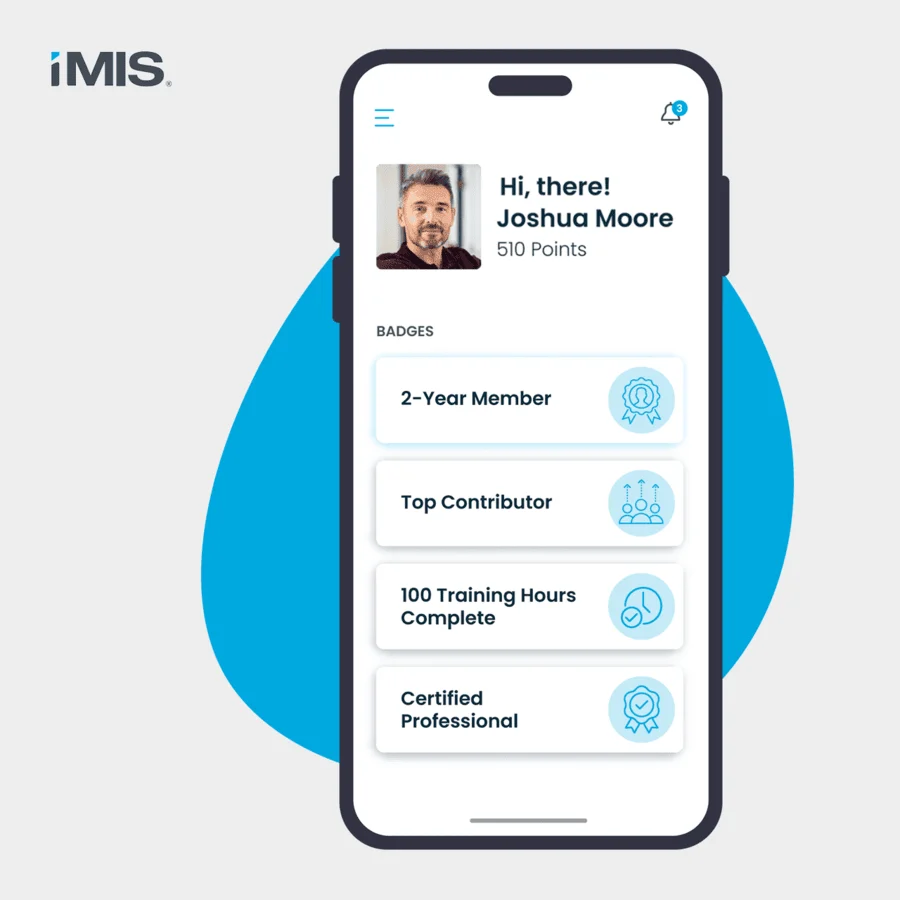
Keep your gamification system fresh by adding new badge categories from time to time. Aligning new badges with seasonal campaigns or urgent community needs ensures the competition consistently supports your current organizational goals.
A large, generalized digital forum can quickly become noisy and overwhelming for users. Creating smaller, targeted spaces allows constituents to connect over specific shared interests or regional challenges.
Here’s how you might create vibrant subgroups that encourage connections:
Set an automatic archival policy for micro-groups that have been inactive for more than 90 days. Closing dormant subgroups keeps your digital community clean and points users toward the most active conversations.
Walking into a new organization is intimidating for many new supporters. A structured mentorship program provides immediate one-on-one relationships that anchor newcomers to your community right from the start.
Build a buddy system by following these foundational steps:
Draft a simple discussion guide for the first few mentorship meetings. Providing a loose agenda eliminates awkward silences and ensures veteran supporters hit the most important orientation points.
Prioritizing peer-to-peer relationships strengthens the overall foundation and sustainability of your organization. When your supporters find real friendship and a true sense of belonging, their loyalty to your mission will naturally deepen.
You don’t have to launch all of these initiatives at once. To build a more connected community without overwhelming your team, choose a single strategy from this list to implement over the next quarter, and gather feedback from your supporters to gauge their initial responses. From here, use those insights to optimize your approach before rolling out additional community-building strategies.

Keep your volunteer program audit-ready. Learn to track, report, and administer AmeriCorps grant funds without risking future funding.
‹ Previous Post1:1 consultation aimed at transforming your volunteer program
Learn how to transform supporters into donors
Help us spread our message